


WSU student and faculty leaders presented to the WSU Board of Regents at a meeting in Spokane Friday, presenting about the funding cuts to student cloud storage, limited opportunities for graduate employment and evolving enrollment numbers, which could have broad implications across the WSU system.
Administrators also highlighted new university tech programs and workforce pipelines aiming to keep up with regional demand.
Graduate student leaders shared their concerns about reduced storage, warning a reduction in cloud space could disrupt the work of hundreds of graduate students relying on the platforms for project and research storage, according to a presentation delivered by the Professional Student Association.
The cut will see Microsoft Cloud storage access dropping from five terabytes to one gigabyte for students and 10 gigabytes for faculty. For reference, one gigabyte equates to 0.001 terabytes, meaning a 99.98% decrease.
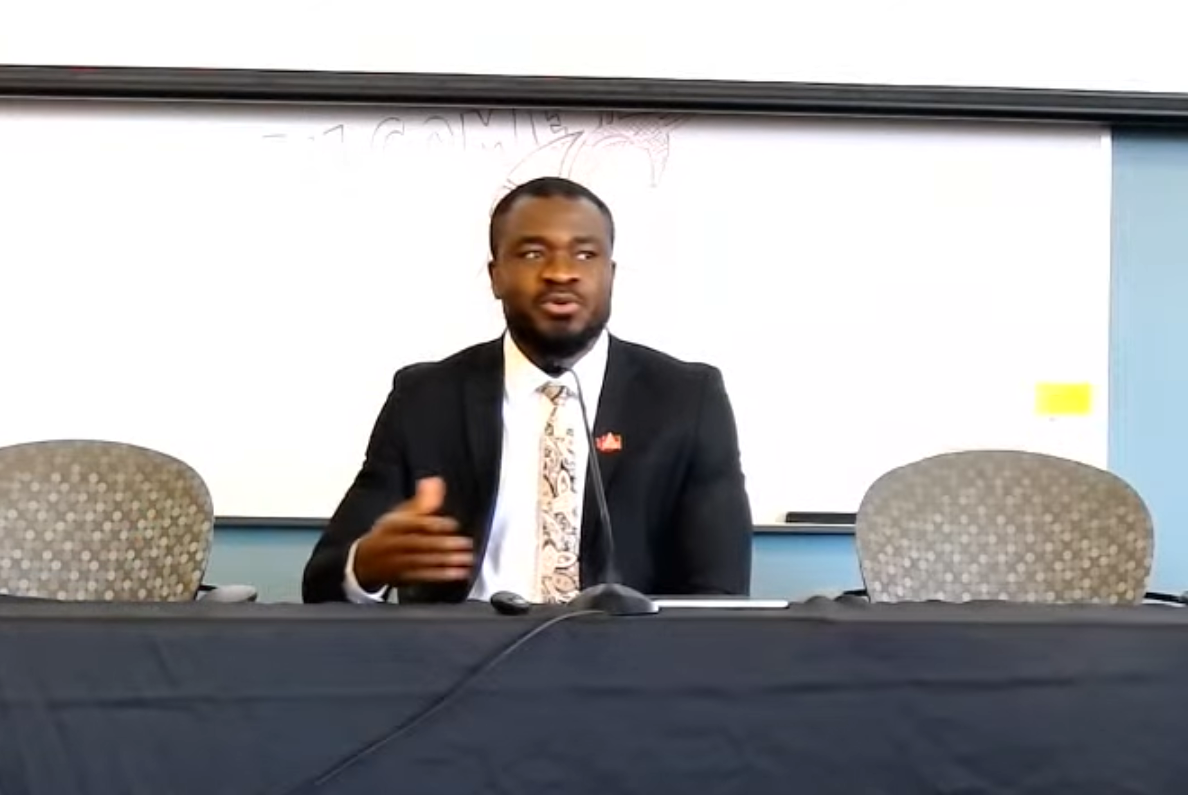
“The university’s change for the Microsoft online storage is a really, really big blow for us as graduate students. If you are a TA, when you develop your lecture slides, that alone is over 500 gigabytes…so for a graduate student to get one gig will be very, very unfortunate,” said GPSA President Desmond Nanayaw Aboagye. “Right now we have five terabytes and I did a short survey with the executive board asking people to show how much space they’re using and the lowest is around 71 [gigabytes].”
GPSA leaders also pushed for increased access to paid assistant positions, saying most jobs funded by student fees are limited to only undergraduate students.
“The majority of the funds are targeted towards salaries, stipends and benefits…generally, you will see 80-85% of the requests go to serving stipends…this department usually hires students; however, because they do hourly work, it’s usually only undergraduate students that can apply to these positions,” Aboagye said. “Graduate students have to have an assistantship, which is 20 hours generally, and you are spending the rest of the time doing your research and studies. There’s no room for any more hourly work.”
Despite the issues raised by GPSA, student leaders at the WSU Everett campus have seen a dramatic increase in the number of graduate students participating in state advocacy work.
During a presentation delivered by Jessie Southam, the Associated Students of Washington State University Everett President, and VP Rafia Shakil, ASWSUE said the group plans to send triple the amount of graduate students to their Coug Day at the Capitol event that started Monday.
The chancellor of the Everett campus, Paul Pitre, also presented, reporting changes to the campus’s enrollment statistics, indicating a growing number of students are balancing school and job commitments compared to past years.
“You see that about 50% of our population now is part-time. We knew that our part-time population would increase because we have what’s called our degree partnership program. That allows students to actually be admitted to both community college and Washington State University at the same time,” Pitre said. “Naturally, your part-time student population will increase…we don’t have 50% of our population that are actually participating in the DPP program. At WSU Everett, we’re definitely increasing our degree partnership program population, but at the same time, we’re just getting more students who are working.”
Pitre also presented on regional statistics indicating growth among older adult demographics.
“The mid-career adults, aged 25 to 39, is where you’ll see the increase,” Pitre said. “ There’s going to be about a 6% increase in that population…that’s where I think WSU Everett really has an opportunity…a lot of students who will be going part-time or students who will be reentering education; higher education is an opportunity.”
Alongside the growth in older student populations, Pitre highlighted the campus’s new academic developments.
“Essentially, two new degree programs we’re bringing to WSU Everett: Computer Engineering is set to launch for the fall of 26’. Computer science is working its way through the faculty senate currently,” Pitre said. “These are two degree programs we’re able to offer at no new cost because we have the core faculty…that’s something that we’re trying to do in these tough fiscal times.”
Also in Pitre’s presentation was the announcement of a private artificial intelligence computing system available for faculty and student use at WSUE.
“This AI cluster that we’re developing provides an opportunity for our students to really play with AI along with our faculty members,” Pitre said. “The model of development that we have for AI at WSU Everett is something that’s very important for our student population.”