




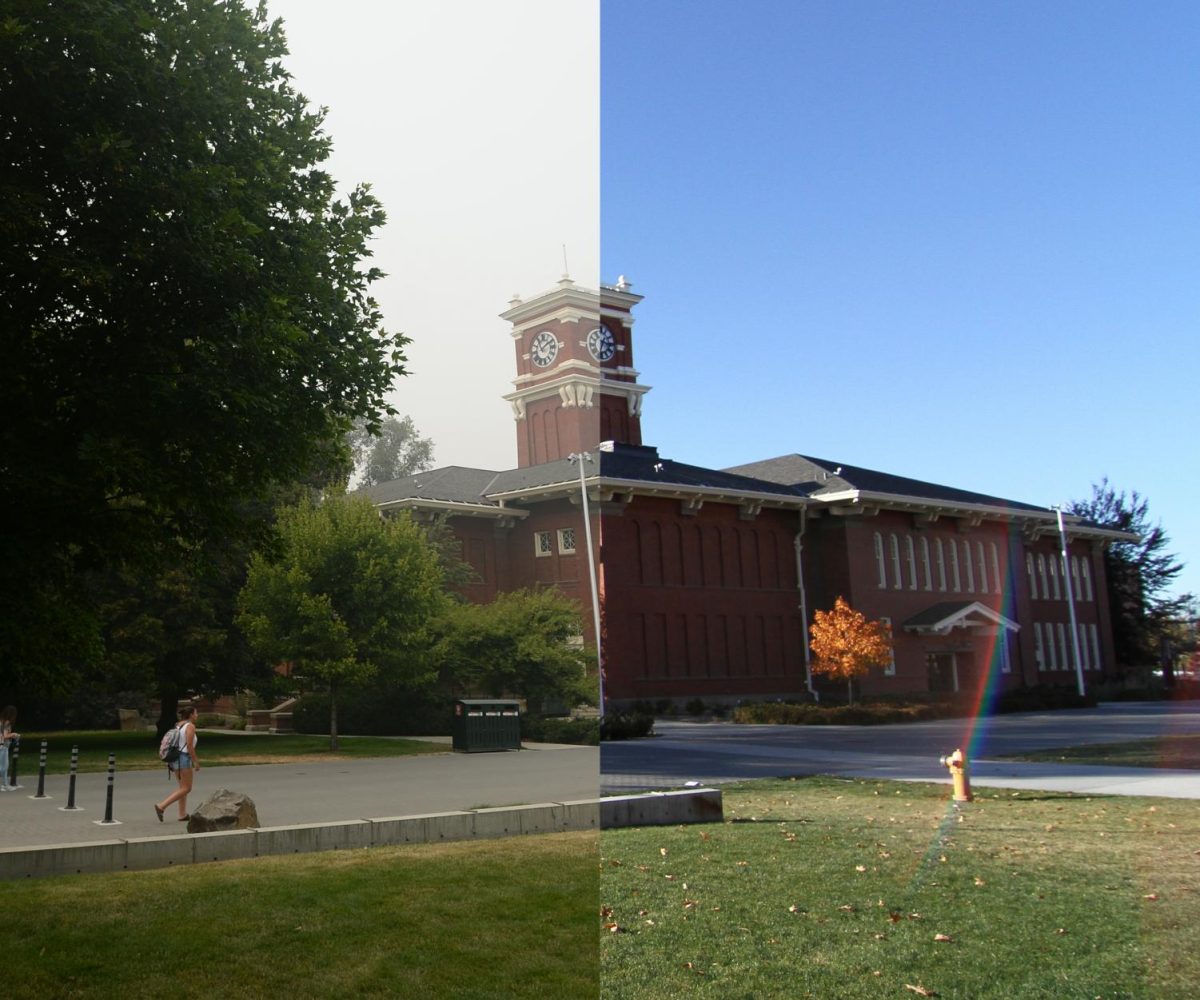
Air quality on the WSU Pullman Campus has recently reached an air quality of 101, also defined as being unhealthy for sensitive groups.
There are currently 11 large wildfires active in Washington state, causing this, according to Josh Ward, a field meteorologist at WSU’s weather station. The majority of these wildfires are located along the eastern side of the Cascades, near the Colville National Forest. All areas near these wildfires will experience poor air quality, but certain wind levels will impact which areas are affected the most by poor air quality.
Ward said that in Pullman, most of the week will be defined by weak winds, resulting in stagnant air flow, meaning that air quality will likely remain poor.
Ward added that next week we will likely see some of the wildfire smoke clear up. However, because of the number of wildfires currently active, moderate to poor air quality is likely to return the following week alongside smoke.
According to The Department of Health, sensitive groups with increased risk are defined as people with lung diseases, people with heart diseases, people with respiratory illnesses, people with diabetes, people 18 and younger, people older than 65, pregnant people, outdoor workers, people of color, tribal and indigenous people, and people with lower incomes.
The Department of Health states that all people should be aware and watch for symptoms such as burning eyes, coughing, throat and nose irritation, headaches, fatigue, wheezing and shortness of breath, irregular heartbeat, and chest pain. If these symptoms are seen, limiting exposure is encouraged. Sensitive groups should limit exposure at this current level regardless of symptoms seen.
Ways to decrease exposure are by limiting the duration of outdoor physical activity and staying inside, according to The Department of Health.
Outdoor workers are encouraged to wear N95 masks, and supervisors are required to make the respirators available for voluntary use.


