
Every time I open the Canvas app or my email inbox, my stomach drops. My heart races and I start to sweat. The same physical reactions occur when I watch “The Conjuring,” but mixed with a distinct thrill that is unique and almost pleasant.
In 1920, “The Cabinet of Dr. Caligari” was released in Germany. Considered the first horror film, it was among the first performances ever put to screen. For years, the film has haunted me, not only because of the haunting story, but because its formula is refashioned in various arrangements in nearly every horror film I have ever seen.
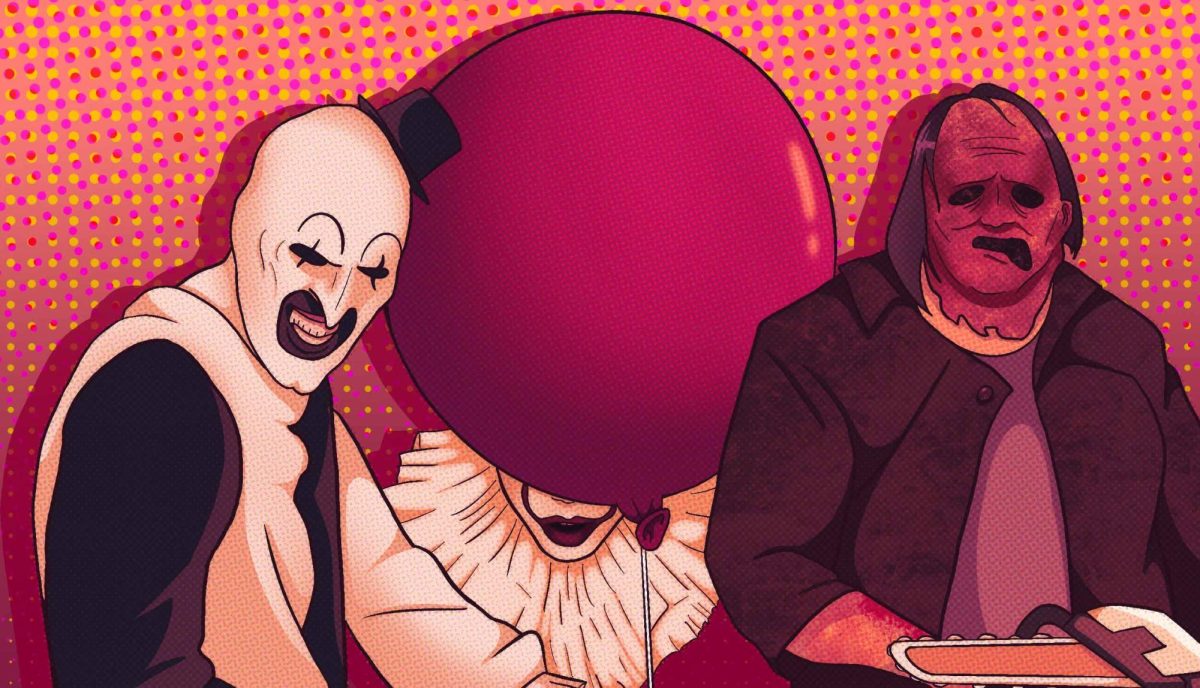
Horror is a deceptively simple genre. Behind all of the blood and gore and witches and ghosts, there are basic fears that, given our animalistic instinct, horror writers can exploit to give us those cheap thrills. All horror antagonists are representative of a greater fear, but repackaged in a fun, splashy way.
“The Cabinet of Dr. Caligari” was released shortly after World War I, when Germany had lost the war and right-wing conservative politics were on the rise. The idea of a “monster in the shadows” is a very direct reference to the post-war slump and growing monster resulting from cultural conflicts.
Similarly, in the 1960s, the seminal horror film “Psycho” reflected a festering social discomfort. Following the placid suburban conformity of the 1950s, Hitchcock showed the monster hidden in the crisp folds of domestic life. Hitchcock’s monster was just a guy – albeit a crazy psycho killer – but a guy nonetheless.
Thinking back to “The Cabinet of Dr. Caligari”, “Nosferatu”, even “King Kong” and “Godzilla,” these monsters were all inhuman, beyond the ethical and reasonable behavior of the people you know.
The 1960s also saw a rise in a public fixation and fascination with serial killers, one that we have not been able to shake since. Countless movies, documentaries and podcasts diving deep into the minds and crimes of serial killers have gained massive popularity. The deep fascination we have with the monster in the framework has a lot to do with our current cultural attitudes.
The greater cultural shift away from community and towards individualism cuts us off from one another, concealing our intentions and making the knowledge of hidden danger more difficult to discern.
I watched ‘Weapons’ recently and felt that this theme was strong, as the characters resisted invasive concern for a member of their community, justifying it with a desire not to be rude, not to make assumptions, not to disturb the carefully arranged social order.
When I think about why horror movies scare me, beyond jump scares and gore, I think about my daily social interactions, the news and how we all move around each other in the world. Horror is inevitable in a world that is so superficial.
The horror genre is socially diagnostic, and given the excellent quality horror movies we’ve seen in the last few years, I am more scared about what that quality says about our culture. In a world void of senseless killing, social injustice, corruption, race and gender conflicts, homophobia and transphobia, I don’t think horror movies would be so entertaining because these fears exploited by film would not be threats in real life.
Horror movies are a fascinating way to analyze society and often accurately expose the most pressing social attitudes. We enjoy horror because it’s a fictional, sensational escape from the challenges we face daily. They also provide a time warp of social concerns, a well-documented recent history soundtracked by high-pitched, continuous screaming.
Horror has always been more than jump scares and immortal monsters; it reflects the fears, tensions and changes of the real world. The horror genre reminds us that fear is human and sometimes facing it can be fun – or not. This Halloween, snuggle up with a warm beverage and rip into your favorite horror movie with the fervor of your favorite horror villain.