

WSU’s student government group, ASWSU, is preparing for a legislative session in which it will be unable to request new or additional funding for higher education from Washington lawmakers.
The news that budget requests will likely not even be addressed came in mid-November when the Senate Democrats’ chief budget writer signaled to lawmakers that there is no money for new spending.
Senate Ways and Means Chair June Robinson told colleagues in an email earlier this fall that she would not accept any new spending requests for the 2025 session due to the extent to which the state is strapped for cash.
First reported by The Washington State Standard, the tight budgetary position the state is in is the reasoning behind the messaging, in which Robinson said, “We don’t have money to pay for what is needed, let alone new spending that members might request.”
For ASWSU, the restriction on financial requests significantly narrows what the organization can lobby for this year’s Coug Day at the Capitol, the annual event allowing higher education student governments to lobby directly to state legislators.
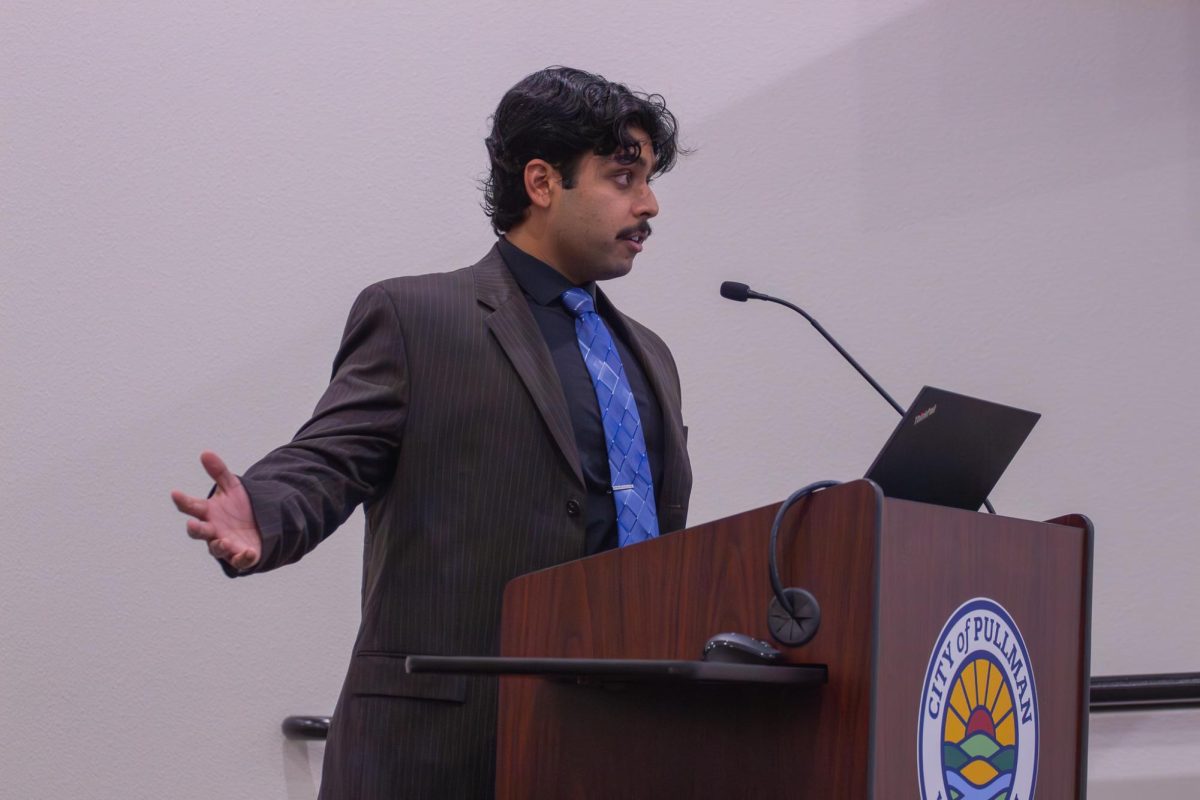
Bhargav Iyer, ASWSU’s director of legislative affairs, said the announcement has forced the student organization to scale back its regular agenda and to essentially abandon any increased or new initiatives requiring funding.
According to Iyer, the organization will have to focus largely on maintaining and protecting funding for existing student-aid programs rather than seeking fiscal backing for new opportunities.
“Right now we’re playing defense…we’re trying to ask for as little as we can, while still getting something of value for our students,” Iyer said.
The monetary shift comes as Washington faces a continuously tightening fiscal environment despite the budget of $77.8 to $77.9 billion for two years, which was passed in 2024.
The implications for ASWSU’s ability to maintain the funding it has garnered for students are substantial. Even the most modest financial asks are likely to be ignored or denied, said Iyer.
“We’re having to re-evaluate what’s feasible,” Iyer said. “Some of the things we would normally propose just won’t be possible this year.”
Instead, ASWSU plans to center its lobbying efforts this year on non- or low-fiscal policy items.
One of the organization’s top priorities is appealing to the legislature to revisit a state statute that threatens the removal of student financial aid for any students found to ‘disrupt’ classroom activity.
According to Iyer, the law has long raised concern about overly broad language and potential implications for financial penalties for conduct that would otherwise be considered constitutionally protected free speech.
Nobody supports violent protest…but the ability to express yourself within your constitutional ability to do so…we see that as kind of central to the student perspective, so that law is in contradiction of what we believe as ASWSU, which is that students have the ability to express themselves and afford themselves their First Amendment right,” said Iyer.
Another lobbying priority for the student government is ensuring the protection of the Washington College Grant and the Workforce Education Investment Account.
Both programs are major sources of funding for financial aid and higher education. Last year, lawmakers took WEA money and used it for other states’ needs, according to Iyer.
With less money available for funding in general, ASWSU officials worry higher education funds might again be redirected.
Iyer said this year, ASWSU is attempting to reintroduce anti-supplemental language into the WEA bill to emphasize to lawmakers the original intent of the account.
“We’d like to make sure that part of it is codified, meaning we have ‘X’ amount of money in that account that is specifically going towards things like the college grant,” Iyer said. “If we enter another bad budgetary year, the state will have more limitations on how they can use that money…especially, they’re not going to be able to subvert it to non-higher-education-related budget items.”
ASWSU is also developing a set of ‘minimal’ cost proposals to bring to Olympia when this year’s Coug Day at the Capitol occurs.
These proposals include potential investments into sexual-assault prevention programming, as well as small funding for undergraduate research support.
News might be on the positive upswing, however, as Washington’s November revenue forecast showed a slight improvement in the state’s proposed budget when compared to earlier predictions.
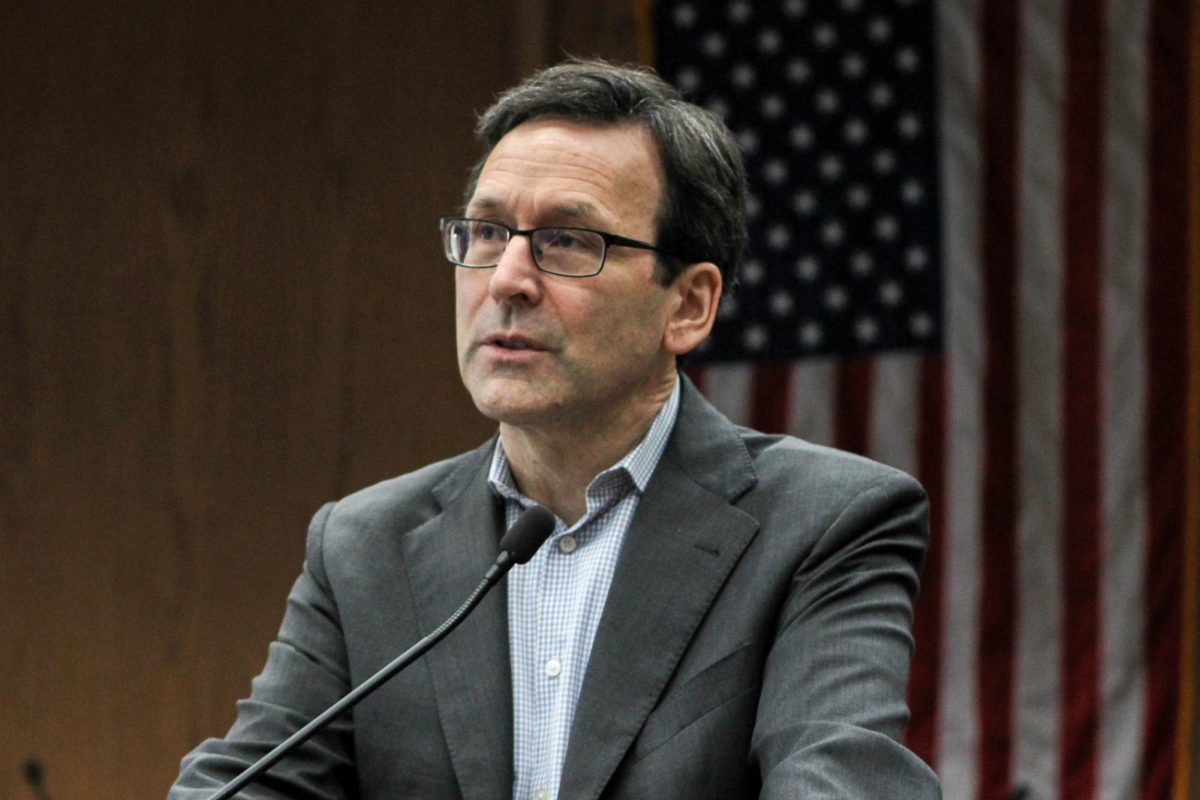
However, state Gov. Bob Ferguson issued a statement cautioning that the more positive prediction was not a sudden resolution to the underlying shortfall.
“It does not change the scale of the problem,” Ferguson said following the budget update.
Ferguson also said that fiscal conditions will require continued restraint from lawmakers.
ASWSU leaders said they are waiting for the governor’s formal budget proposal to determine whether any additional small requests could be considered.
Currently, student leaders have shifted their goals to devote more effort to relationship-building with legislators and other higher-education stakeholders, according to Iyer.
These relationships include coordinated advocacy roles with the student government for the University of Washington and smaller student governments, as well as meeting with lawmakers and conducting outreach, according to Iyer.
“It’s about thinking creatively and pragmatically and making sure that we have accurate and best-fitting pathways to provide for students without overextending ourselves within the state legislature,” Iyer said. “That’s kind of where things get tough…it’s been a learning experience.”