


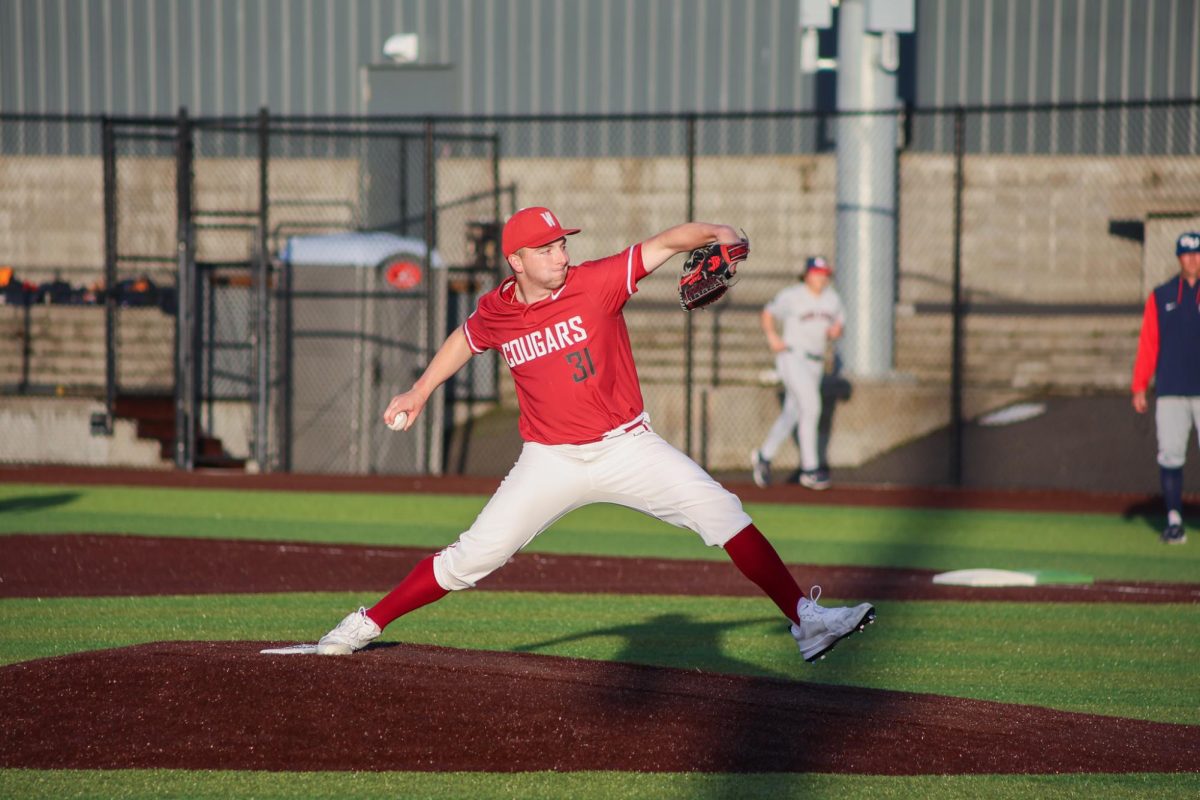
In 2025, righties outnumbered lefties 13 to 4 on the Cougar roster. In 2026, the ratio is about the same at 13 to 5. It is typical for a team to carry far more righties than lefties, but having a mix of southpaws in the rotation can be critical for most teams.
The ability to switch to the left side, especially in long weekend series, can be the difference between a series win and a series loss. With redshirt sophomore Nick Lewis being the Cougs’ resident lefty starter, their four other southpaws serve crucial relief roles.
With two transfers in the offseason, the Cougs have picked up some fire power on the left side to complement their 13 righty arms.
Who are these new Cougs? Let us take a look…
Taber Fast (Transfer – Redshirt sophomore)
After two seasons with Texas Tech, the Chehalis, Wash., native has found his way back home.
Despite being a two-way player, Fast has only recorded two at-bats in his college career. This sample size gives him an inflated batting average of 0.500 off one hit. The bulk of his time has been spent on the rubber.
On the mound in 2023, Fast started seven games in 12 total appearances. He fanned 23 batters, allowed 23 earned runs, 39 hits, 11 doubles and four home runs. This totaled an ERA of 6.03 in his debut season.
In 2024, Fast stumbled backwards slightly, with his ERA slipping to 9.00 after five total appearances and only eight innings pitched. In 2025, the injury bug sat him down for the entire year.
Although he is a two-way player, WSU most likely will consolidate Fast to the bullpen as a relief arm. While his college stats are not that impressive, he could prove to be a competent middle reliever in the Coug rotation.
Owen Harper (Transfer – Junior)
To complement Fast on the left side, the Cougs snatched up a seasoned JUCO southpaw.
Harper spent two years with the Paradise Valley Pumas, and during his tenure he posted an impressive resume, including 89 strikeouts, 69 hits, 36 earned runs, 30 walks and a 3.78 ERA.
His sophomore campaign was the most impressive, striking out 67 batters, allowing 58 hits, 26 earned runs, 22 walks and a 3.33 ERA. He did this through 70.1 innings of work, 55 more innings than he recorded in his freshman year.
In 13 total appearances last season, Harper started on the bump only once. His other 12 appearances were in relief, where he averaged 5 ⅓ innings per relief stint.
As predominantly a relief pitcher, Harper may be exactly what the Cougs are needing. If a starter gets into trouble early, Harper may be able to pick up the reins and limp the team to the ninth inning.
Middle relief pitching was the Cougs’ sore spot last season, and Harper’s effectiveness from the bullpen could be a viable solution.