


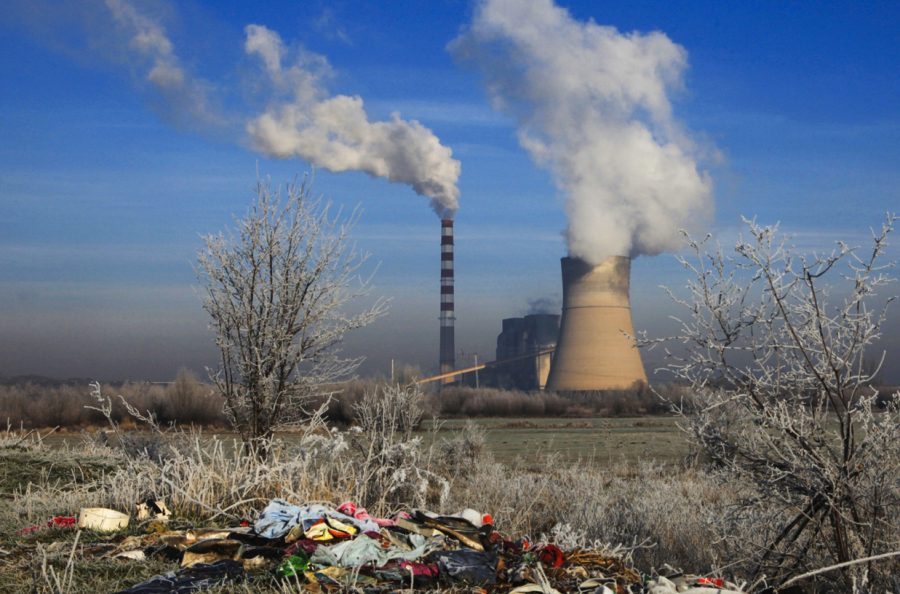
Atmospheric carbon dioxide remains a major driver of climate change. In February 2026, carbon dioxide reached 423 parts per million, according to NASA.
Gokce Gulfidan, a Washington State University Ph.D. candidate, said CO2 is approximately “76,80 percent of the total greenhouse gases.”
“These greenhouse gases, in general concept, are the largest contributor to global warming,” Gulfidan said.
This issue makes it necessary to capture carbon dioxide and build a more circular carbon economy, where CO2 is turned into useful products, released again and then reused to create more valuable products.
One potential way to do this, studied by the Wang Group at WSU, is turning CO2 into ethanol through a chemical reaction called CO2-to-ethanol hydrogenation.
The usefulness of ethanol cannot be understated.
“Ethanol is a unique molecule,” Gulfidan said. “You can think of it as a building block for the synthesis of other kinds of chemicals and fuels.”
The reaction is not without difficulties.
“CO2 is a very stable molecule,” Gulfidan said.
To overcome that challenge, researchers use a catalyst, a material that speeds up a chemical reaction without being consumed. By combining iron and rhodium on a silica support, Gulfidan said, researchers are able to activate the CO2 so it can participate in the reaction.
Activation refers to changing CO2 from a very stable molecule into a more reactive one.
“The first step is to activate the CO2, and actually rhodium is responsible,” Gulfidan said.
This happens when the carbon and oxygen atoms in CO2 attach to the rhodium. Among chemists, that process of attachment is referred to as adsorption.
Another challenge is that CO2 has only one carbon atom, while ethanol has two.
“We need to join two carbon-containing intermediates, which is often the most difficult part of the process,” Gulfidan said. “This step happens on iron species, including iron carbide.”
Gulfidan said the roles of rhodium and iron in turning CO2 into ethanol were not fully understood in previous research.
“Our study shows why combining the two metals is critical and helps guide the development of more efficient catalysts,” Gulfidan said.
The research is ongoing.
“I’m continuing to study the rhodium iron system,” Gulfidan said.
Building on that earlier work, Gulfidan is investigating how different catalyst structures influence the formation of active sites during CO2 hydrogenation.
“Moving forward, I want to understand how these sites impact ethanol production and shape the overall product distribution,” Gulfidan said.