




For third-year WSU animal sciences student Allison Gasseling, agriculture has always been a part of life. The Gasseling family’s hops farm has been passed down through five generations.
Her long involvement has exposed her to something else, though: the constant fighting women must do to show they belong in the industry.
“Even just seeing my mom talking… because she runs our office and having people come in and talk to her and almost not thinking she knew what she was talking about just because she was a woman and they want to talk to my father,” Gasseling said. “It’s just things like that where there was always something in me that was like, I want to talk about this. I want to push for women to be able to know that they have a spot in agriculture.”
Gasseling is a woman in agriculture. Back home in Yakima, Washington, Gasseling was the president of her high school’s FFA club in her senior year and helped her father run the farm and raise pigs. She even launched her own business, G5 livestock, in 2024, aptly named after the five generations of the Gasseling farm.
She is also much more than that. She is Miss Washington AgHERculture. Miss AgHERculture is a state and national-level pageant program that provides platforms to girls and women to advocate for American agriculture and educate communities about the value of the industry. Gasseling said she is not really into pageants, but when she saw the program online, she felt a connection to the dedication to advocating for women in agriculture.
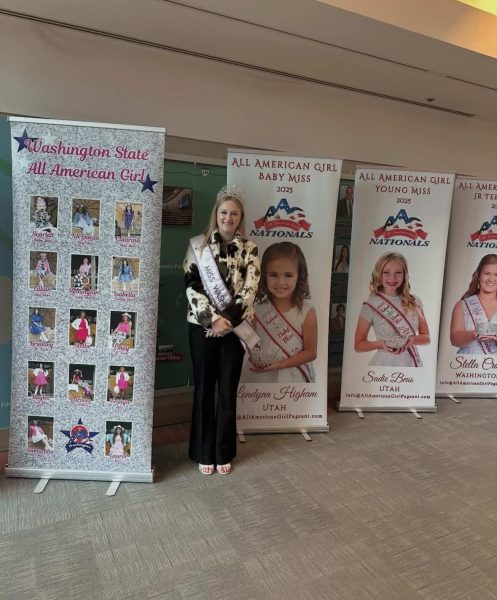
After applying, Gasseling was selected in 2025 as the first person to represent Washington through the program. As part of the role, she does outreach through working with local organizations, programs and schools to volunteer and advocate for agriculture. She has conducted donation drives, spoke in classrooms and recently volunteered at the Central Washington Agricultural Museum near her hometown.
“I just can’t stress enough how impressive it was that she reached out and said, ‘Hey, what can I do at the Ag Museum?’” said Cheryl Reese, the museum’s education and event coordinator. “I mean, that just blew me away.”
While Reese helps out at the museum quite a bit, her full-time job is a coordinator for the WSU Farm Stress and Suicide Prevention Program, a program that provides counseling and mental health resources to farmers in the state. Reese, 56, grew up around agriculture like Gasseling and said she could drive a forklift before she could drive a car.
Reese had an experience similar to Gasseling with her observation of women in agriculture when she was younger. The only difference is the industry was even less progressive and the only women in agriculture she knew were the wives of farmers.
“Through my young eyes, women in agriculture were the ones that worked in the packing warehouses,” Reese said. “They weren’t the ones out there promoting agriculture and promoting farms and showing what it’s like out there actually digging in and getting your hands in the farm.”
Reese said it takes a special kind of person to be willing to push for change at a young age, but there is no better person to do that than Gasseling, a family name she says has carried a lot of weight in the state for a long time.
As Gasseling represents the next generation of women in agriculture, she has identified a new problem to tackle: the steady decline in farms and farmland.
“Agriculture has been the whole basis of my life,” Gasseling said. “It’s the reason that I’m here today. And [the decline] really upset me. I feel like if I can inspire the next generation to hopefully get into that and help it grow …because our youth is what’s going to help us here. That’s what we have got to focus on right now.”
With that newfound focus, Gasseling is looking to educate the next generation about the importance of agriculture.
According to a 2025 data summary from the U.S. Department of Agriculture, Gasseling has every right to be concerned. The number of farms have decreased by 7.8% since 2018 and total farmland has dropped by nearly 25 million acres in the last seven years. The only sales class to gain land and farms were those with over $1 million sales and farms generating over $500,000 own over 50% of U.S. farmland.
Reese shares a similar mindset as Gasseling, highlighting the need to hone on the younger generation now to reverse the trends.
“I would say we need the younger generation to stay with their families and work that family farm and don’t let these farms die out,” Reese said. “Just get out there and be a role model for the younger girls who are looking up to you as well.”
This November, Gasseling will compete in the inaugural national pageant in hopes of being crowned Miss AgHERculture and representing the nation. While the crown is a bonus, Gasseling said the honor of receiving the title is more about the educating and community work being done.
While Gasseling has plans post-graduation to go vet school and pursue a career there, she knows there will always be a place for her in agriculture through advocacy and activism. And wherever life takes her next, she hopes her work not only inspires the younger generation to continue in agriculture, but also young women to advocate for themselves without fear, just like she did.
“I think a lot of the time, women being loud, we’re seen as being blunt, or we’re seen as being rude,” Gasseling said. “I think it’s really important that you voice your opinions, and you’re not afraid of voicing your opinions in a room full of a bunch of, like, 60-year-old farmers.”