

For one night a year, women can be anything: a fairy, a cop, or even just a concept. Yet people will still have something to say about it. Halloween is supposed to be a night of fun and self-expression, but for many women, it is also a reminder that society’s opinions on what they wear never seem to take a night off. Whether she shows up in fishnets or flannel, someone is going to judge her.
Washington State University junior and business hospitality major Reaghan Coyne knows that feeling all too well.
“Every year, I feel a pressure, because someone always has an opinion, and they’ll say it right to your face,” Coyne said.
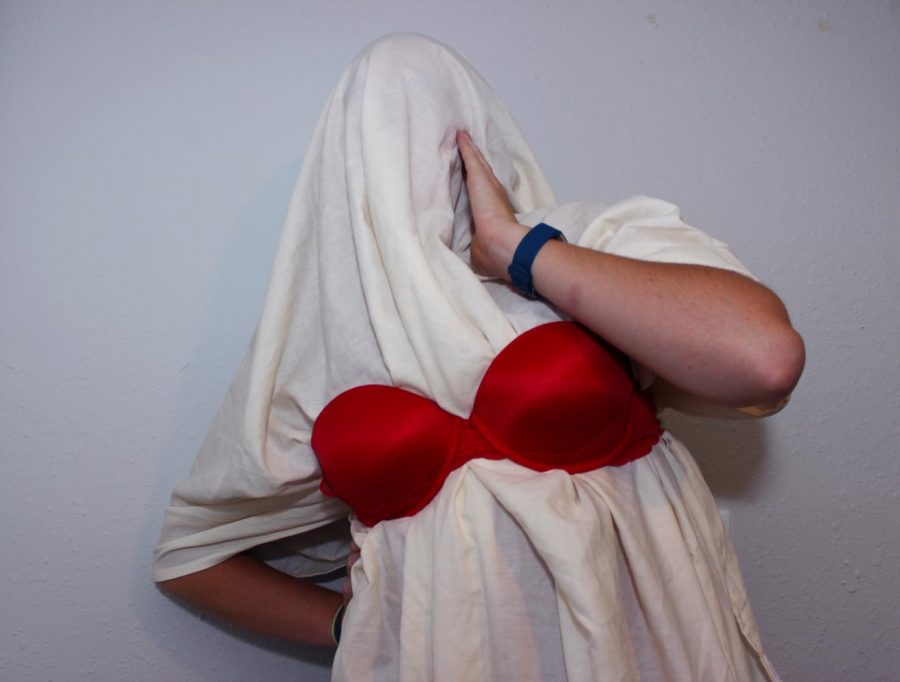
That constant judgment transforms a holiday meant for creativity into something performative. Women often find themselves weighing not just what they want to wear, but how it will be perceived. The moment a costume slips into the “too sexy” category, people assume it is for male attention–but if it’s too modest or funny, the criticism becomes: “Why didn’t you try harder?”
Coyne says that social media only adds fuel to the fire.
“It depends on the trends going on that year and what side of social media you’re on,” she said. “People judge you based on what’s on your feed or your ‘For You’ page. It’s like you can’t win either way.”
Platforms like TikTok and Instagram have turned Halloween into a kind of runway, one where creativity and confidence can not only be celebrated but also ruthlessly critiqued. Scrolling through endless posts of influencers and celebrities in coordinated, perfectly lit costumes can make anyone feel like they are being graded. Likes, shares and comments have become the new measuring stick of whether someone “pulled off” their look.
But this culture of comparison is not new; it just has a bigger audience now. The sexualization of women’s Halloween costumes has been a long-running conversation, dating back decades. Stores are still stocked with hyper-feminized versions of nearly every costume imaginable — from nurses and referees to crayons and cartoon characters. Somewhere along the way, “women’s” Halloween costumes became synonymous with “sexy” whether women actually wanted that or not.
Coyne sees this as part of a larger double standard.
“A lot of people think women dress either too sexy, or not sexy enough,” she said. “It’s like there’s no in between; either you’re ‘trying too hard’ or not trying enough. There’s judgment around whatever women wear every day. Now that they’re able to express themselves for one day, what they truly like, people double down and beat them down for it.”
She is right. Halloween becomes a reflection of how women are policed in everyday life. The night might come wrapped in glitter and cobwebs, but the underlying message is the same one society sends year-round: women’s bodies are fair game for public opinion.
Still, there is hope that things are shifting, at least a little. Coyne believes Gen Z is more open-minded about self-expression and less concerned about fitting into gendered expectations.
“I don’t think we’re stuck in the same cycle,” she said. “People are just going to do what they want. If they like it, they like it, and that’s for them.”
That shift might be the start of something bigger. Younger generations are reclaiming Halloween, not as a night for validation, but as a form of self-celebration. The trend is not about being “sexy” or “modest,” but about being authentic. Whether someone is dressed as a glamorous vampire or a giant banana, what matters most is that they feel good doing it.
At the end of the night, Halloween should be about fun, creativity, and confidence, not fitting into someone else’s definition of what a woman “should” look like. The real horror of Halloween is not the ghosts or ghouls; it is the double standard that refuses to die.